


Linkage Finger

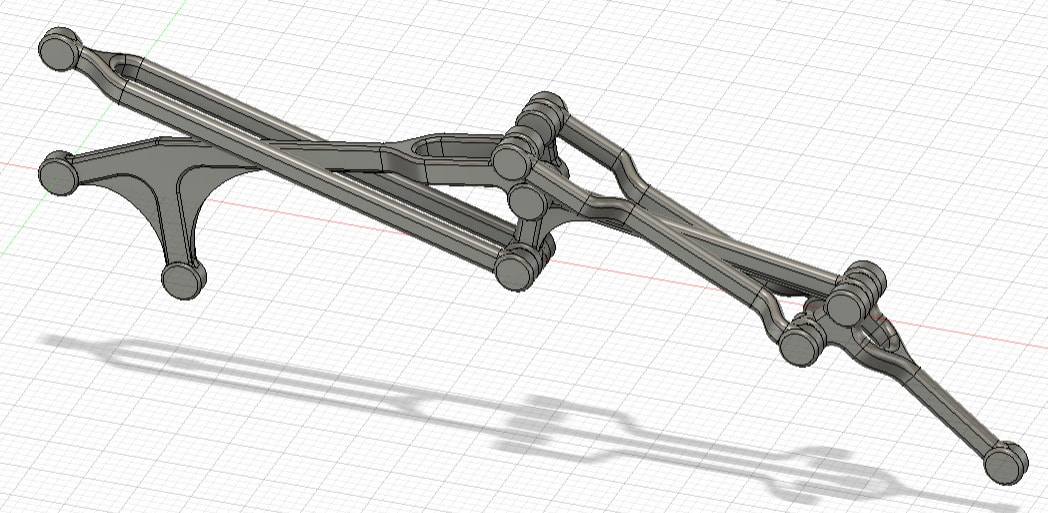
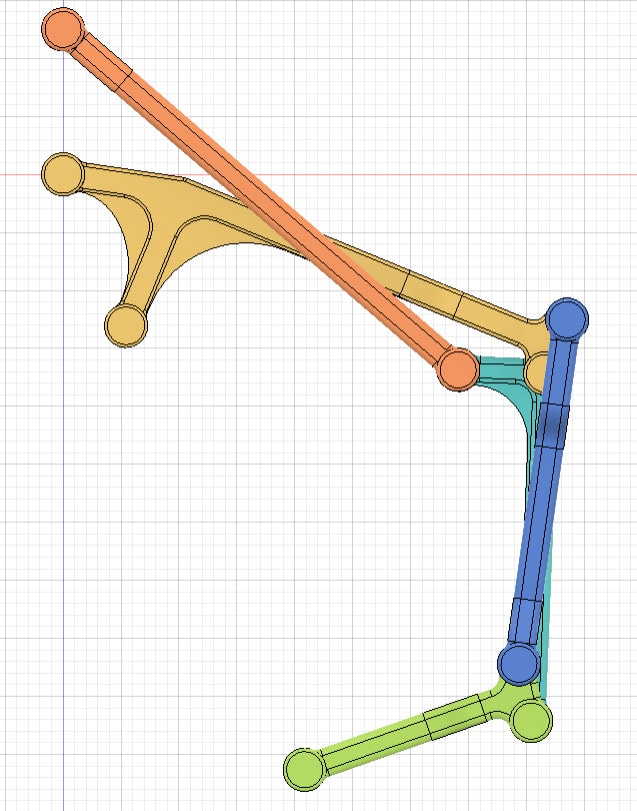
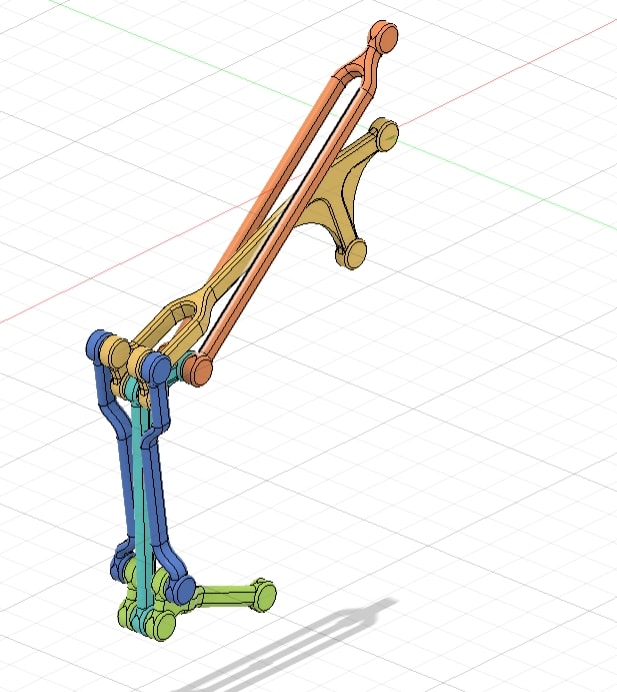
The Linkage Finger was created as a proof of concept to explore how mechanical linkages could replicate the bending motion of a human finger. The design consists of three articulated segments connected by a series of pivoting linkages that transfer motion between the joints. The mechanism uses a combination of rigid links and rotating joints to coordinate the movement of the finger while maintaining a compact overall structure.
The design incorporates three planned actuation inputs. The first controls the movement of the entire finger, while the other two are intended to control the middle and distal segments through the linkage system. This arrangement allows the finger to achieve different bending configurations without requiring a separate actuator mounted directly at every joint.
The current model focuses on the geometry and kinematics of the mechanism, including linkage lengths, pivot locations, and the resulting range of motion. Future versions will incorporate dedicated mounting points for control rods or actuators, allowing the mechanism to be driven externally and integrated into a larger robotic or prosthetic assembly.
This is just a proof of concept, and printing this will not result in a working prototype.
Manufacturing this will provide little help in regards to end stage use.
This prototype is mainly meant as a proof of concept for work that can be used in prosthetics, robotic actuators, and linkage research.